
Bioinformatics Day: Biology Made Computable One Click At A Time

When Information Technology met Biology – A match made in the 1960s
It wouldn’t be an exaggeration to call Margaret Dayhoff, the godmother of Computational Biology while commemorating her contributions on Bioinformatics Day. Today we recall her as a pioneer in Biophysics and Bioinformatics, but back in the day she was one of few women in Science, engineering solutions to make biological information accessible. She developed Atlas – first protein sequence database, that made storage, analysis, and comparison of sequences unbelievably easy.
Her contributions and continuous efforts of scientists and engineers in developing this discipline have made science available to every life science scholar with access to a computer in the world. Bioinformatics has come a long way from acting in a supporting role to becoming the protagonist in the story of biological research.
Bioinformatics for the win
Since Frederick Sanger first sequenced insulin in the 1950s, Bioinformatics has come a long way. Here are some key milestones of it’s journey:
Human Genome Project (1990–2003)
Six countries contributed to an international project that decoded the first human genome in 13 years.
Genome Sequencing Cost Revolution — NGS Technology (2001–2020)
High-throughput technology reduced human genome sequencing cost from ~$100 million to under $1,000 in two decades.
Biological Databases — Pioneered by Margaret Dayhoff (1965)
Atlas inspired the public nucleotide database GenBank (1982). Today, 1,700+ biological databases are the backbone of independent research globally.
Precision Medicine – Genomic Diagnostics in Healthcare (2015 onwards)
Curated genomic databases and individual sequencing have enabled precision therapies in cancer, rare diseases, and cardiovascular genetics, helping in reducing the cost and side effects of treatments.
AI-Driven Structural Biology — AlphaFold (2021)
AI-backed algorithms predicted 200+ million protein structures, accelerating drug discovery, vaccine research, and enzyme engineering exponentially.
Global Genomic Medicine and Bioinformatics Pipelines (Present)
Over 7 million human genomes have been sequenced globally, driving population genomics, disease studies, and precision healthcare.
India writes Bioinformatics next big chapter
India is preparing to take the main stage of genomic and bioinformatics research, thanks to national initiatives and collaborative infrastructure. Programs like the Genome India Project have sequenced 10,000 genomes from 83–99 diverse Indian populations, creating one of the first reference datasets representing the country’s genetic diversity. This provides global representation and encourages independent niche research, particularly for conditions unique to its 1.4-billion-person population across 4,600 genetic groups.
Growing collaboration between academic research, government initiatives, and biotechnology companies is laying the groundwork for environments to analyze large genomic datasets and translate them into diagnostics, therapeutics, and data-driven healthcare solutions.
GenomeBeans: Bioinformatics Built for the Era of NGS Research
Being a part of the Bioinformatics community, GenomeBeans upholds the spirit of scientific discovery by building innovative solutions for NGS data research. Our team of bioinformaticians and engineers has designed robust pipelines that offer frameworks for:
- Identifying variants associated with cancer and genetic diseases
- Exploring microbial diversity and functional proteins in environmental and human samples
- Analyzing gene expression variation across samples
- Profiling adaptive immune repertoire diversity using sequencing data
We understand science is teamwork. Therefore, GenomeBeans equips researchers with the tools and strategies needed to conquer the Everest of NGS-based research. Our bioinformaticians work closely with you to understand the vision behind your study and guide you at every step, from sample data submission to interpreting results once the pipeline has completed its work.
Popular Post
-
19 October 2026
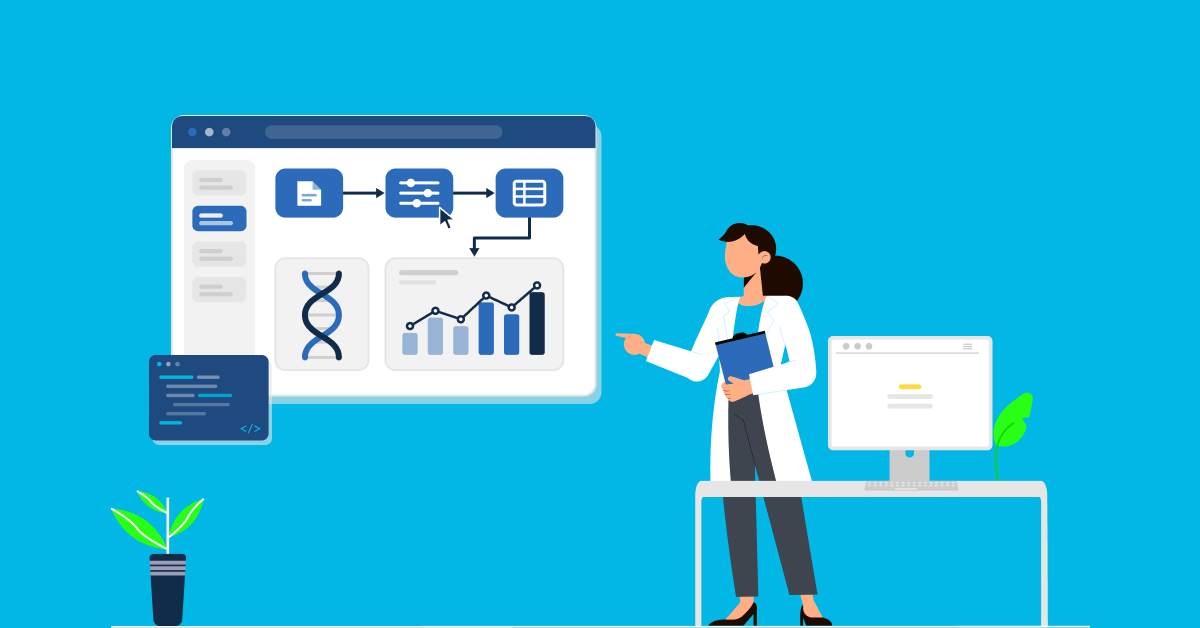
Can No-Code Bioinformatics Replace Coding? Here’s Where It Helps
-
12 October 2026
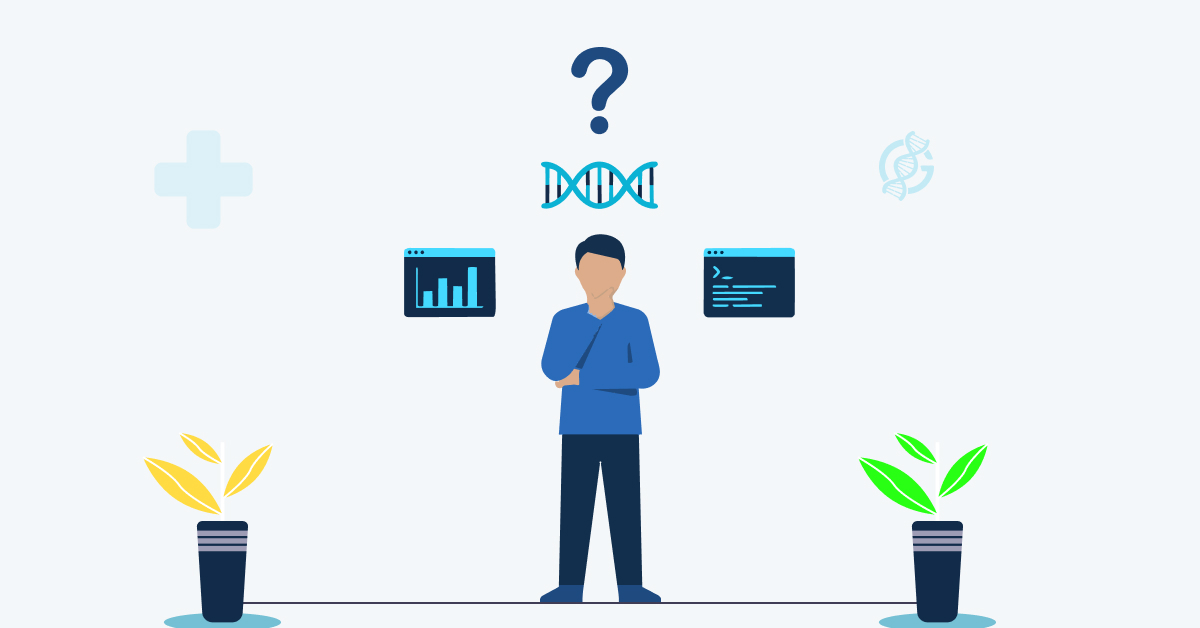
Bioinformatics Tools Are Everywhere. Knowing Which One to Use Is the Hard Part
-
05 October 2026
Bioinformatics vs Data Science: What’s Actually Different?
-
28 September 2026
How Scientists Use Bulk Transcriptomics to Understand What a Drug Does Inside Cells
-
21 September 2026
Inside a Brain, Cell by Cell: What Alzheimer's Research Looks Like at Single-Cell Resolution