
Key to the Biological Lock: DNA Structure to Genomics
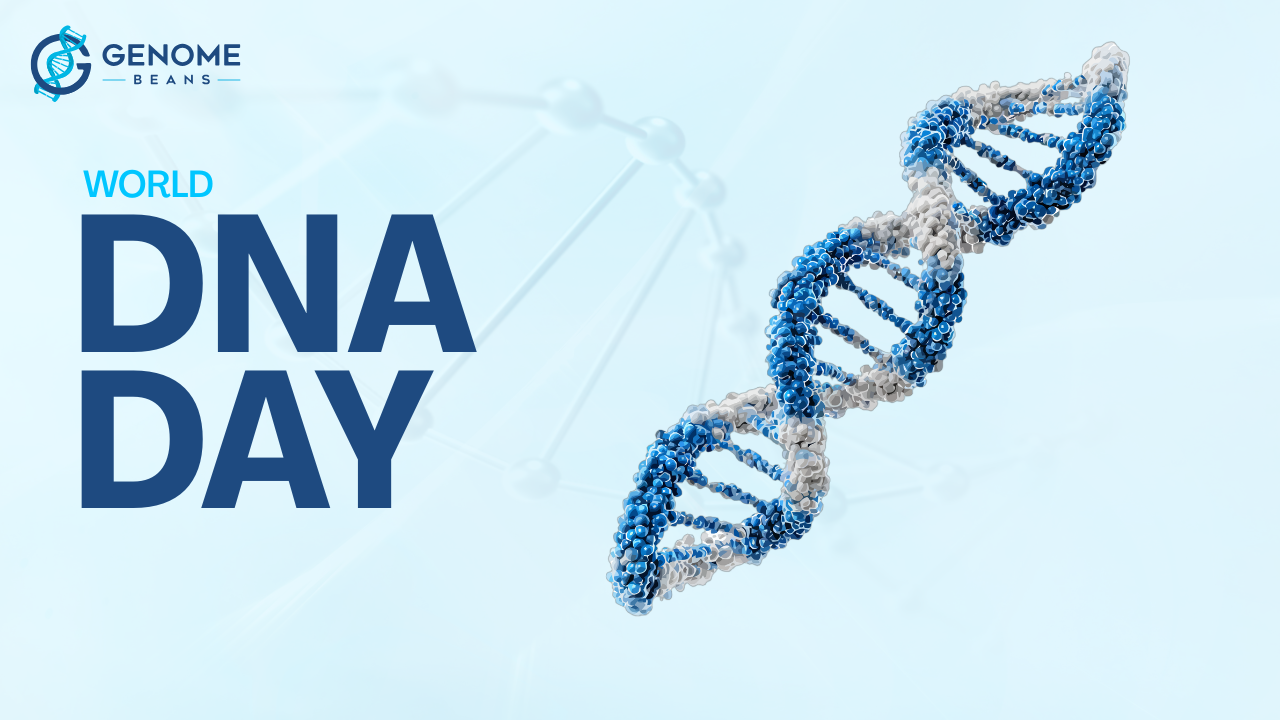
Inside every cell lies a code compact, precise, and incredibly powerful. DNA (Deoxyribonucleic Acid) is the fundamental molecule of life, carrying genetic instructions that define how organisms grow, function, and evolve.
Each year on April 25, DNA Day is celebrated to honor one of the most important discoveries in science. It reflects how far we have come from understanding the DNA structure to advancing into the era of modern genomics and genetic research.
Two Breakthroughs That Changed Biology Forever
The foundation of modern genetics rests on two major milestones that reshaped biology.
The first was in 1953, when scientists discovered the double helix structure of DNA. This discovery revealed how genetic information is stored in a stable, organized structure made of four nucleotide bases – A, T, G, and C. It explained how traits are inherited and how biological information is passed across generations.
The second major milestone was the Human Genome Project (2003), an international effort that mapped nearly all human genes. This breakthrough helped scientists understand that complex traits are not controlled by single genes but by networks of interacting genetic elements.
Together, these discoveries laid the foundation for molecular biology, biotechnology, and modern genomics research.
The Completion of the Human Genome
Although the Human Genome Project was a historic success, parts of the genome remained incomplete due to technological limitations in sequencing repetitive DNA regions.
This gap was finally closed in 2022 by the Telomere-to-Telomere (T2T) Consortium, which produced the first complete human genome sequence.
This achievement improved our understanding of:
- previously hidden genomic regions
- chromosome structure and stability
- genetic variation linked to disease
It marked a major advancement in DNA sequencing technology and genome assembly science.
From DNA Sequence to Functional Genomics
Modern genomics is no longer just about reading DNA, it focuses on understanding how DNA works inside cells.
Large-scale projects like ENCODE (Encyclopedia of DNA Elements) are helping scientists identify functional regions of the genome that control gene activity.
This has expanded the field of functional genomics, which studies how genes are regulated and expressed in different biological conditions.
Key areas of focus include:
- gene regulation and expression
- non-coding DNA functions
- epigenetic changes
- RNA and transcriptomics
This shift is helping scientists understand how identical DNA can produce completely different cell types in the body.
How Genomics Is Transforming Medicine
One of the biggest impacts of DNA sequencing and genomics research is in healthcare. Medicine is increasingly shifting from a general approach to a more precise system where treatment is guided by an individual’s genetic information.
Genomics is now widely used in:
- Genetic diagnostics: Early detection of inherited disorders by identifying DNA variations linked to disease risk.
- Cancer research: Identifying mutations that drive tumor growth, enabling more targeted treatment approaches.
- Personalized medicine: Designing treatments based on a patient’s DNA for better effectiveness and fewer side effects.
These advancements are making healthcare more accurate, predictive, and patient-specific, driving the growth of precision medicine.
Beyond Medicine: Expanding Role of Genomics
Genomics is not limited to healthcare, it is transforming multiple scientific fields.
In agriculture, it is helping develop crops that are more resistant to drought, pests, and climate stress. In microbiology, it is used to study microbial communities and track antibiotic resistance. In evolutionary biology, it helps reconstruct the history of species using genetic data.
Across all these fields, genomic research and DNA sequencing technologies are unlocking deeper insights into life at the molecular level.
The Challenge of Genomic Data
With the rapid advancement of sequencing technologies, the volume of biological data is increasing at an unprecedented rate.
Techniques such as whole genome sequencing, transcriptomics, and metagenomics generate massive datasets that require advanced computational analysis.
The challenge today is not data generation, but data interpretation. Researchers rely on:
- bioinformatics tools
- machine learning models
- computational biology methods
to convert raw data into meaningful biological insights.
Supporting the Future of Genomic Research
At GenomeBeans, we help researchers simplify complex genomic datasets into clear and actionable insights.
We focus on supporting gene expression analysis, variant interpretation, multi-omics integration, and large-scale sequencing data processing. By reducing analytical complexity, we enable scientists to focus more on discovery and innovation in genomics research and bioinformatics.
The Future of Genomics
The field of genomics continues to evolve rapidly. Each breakthrough—from the discovery of DNA structure to complete genome sequencing—has expanded our understanding of life.
The future will likely be shaped by AI-powered genome analysis, real-time sequencing technologies, and advanced gene-editing tools like CRISPR. These innovations could enable earlier disease detection, improved treatments, and new possibilities in biological engineering.
Frequently Asked Questions
What is DNA Day?
DNA Day is celebrated on April 25 to mark the discovery of the DNA double helix (1953) and the completion of the Human Genome Project (2003). It highlights the importance of DNA in genetics and modern biology. It also promotes awareness about advances in genomics and genetic research worldwide.
Why is the DNA double helix important?
The DNA double helix explains how genetic information is stored, copied, and passed from one generation to another. It forms the foundation of modern genetics and molecular biology.
What is the Human Genome Project?
The Human Genome Project was a global scientific effort that mapped nearly all human genes, helping researchers better understand genetic diseases and human biology.
What is genomics?
Genomics is the study of the complete set of DNA in an organism and how genes interact to influence traits and biological functions. It focuses on understanding the entire genome rather than individual genes alone.
How is genomics used in medicine?
Genomics is used for disease diagnosis, cancer research, and personalized medicine, where treatments are based on a person’s genetic profile.
What is the future of genomics?
The future of genomics includes AI-based analysis, gene editing, precision medicine, and faster DNA sequencing technologies.
Popular Post
-
19 October 2026
Can No-Code Bioinformatics Replace Coding? Here’s Where It Helps

-
12 October 2026
Bioinformatics Tools Are Everywhere. Knowing Which One to Use Is the Hard Part
-
05 October 2026
Bioinformatics vs Data Science: What’s Actually Different?
-
28 September 2026
How Scientists Use Bulk Transcriptomics to Understand What a Drug Does Inside Cells
-
21 September 2026
Inside a Brain, Cell by Cell: What Alzheimer's Research Looks Like at Single-Cell Resolution